Writers on Writing Bonus Feature: “The Future of Fiction” by Borden Deal
In compiling our Writers on Writing issue (Summer 2025), we discovered a number of essays, poems, and stories that explored topics central to the literary life. We are including on the blog some additional pieces from the Prairie Schooner archive.
Anxiety about the state of fiction isn’t a 21st-century development. Novelist Borden Deal (1922-1985) asserts in this essay, “The Future of Fiction” from the Fall 1954 issue of Prairie Schooner, that “fiction has ceased to communicate.” Among the culprits: “absolute consistency of character and action, a deliberate obscurity in meaning and symbol, a feeling of achievement and pride when it is felt that only a select and perceptive few can be expected to understand the story…”
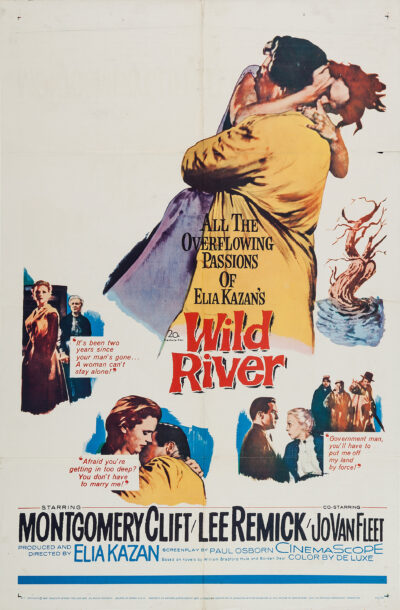
Borden Deal’s 21 novels (published under various names) include the bestseller Dunbar’s Cove, which was made into the movie Wild River starring Lee Remick and Montgomery Clift (1960). His short story “Antaeus” (originally published in Southwest Review in 1961) was widely reprinted in textbooks and anthologies. Deal was a child of the Depression and a veteran of the Navy, and his jobs over the years included fighting forest fires, hauling sawdust for a lumber mill, harvesting wheat, and serving as an auditor for the Department of Labor.
Deal also published fiction in Prairie Schooner: the short stories “This the Road” (Spring 1950); “A Time for Knowing” (Fall 1950); “The Green Silk Parasol” (Summer 1952); “A Variety of Porches” (Summer 1953); “Hunt the Stranger” (Winter 1953); and “And Desperate Men” (Fall 1954).
The Future of Fiction
by Borden Deal
Originally published in the Fall 1954 issue of the Schooner
It is generally agreed that fiction is in a parlous state today—and the outlook for the future is even dimmer. Less and less fiction is being read, for people are beginning to turn elsewhere for those qualities which they looked for and found in fiction in the past. We have today the curious phenomenon of a population that is more widely educated than any known in history, of a lower rate of illiteracy than almost any other country, and yet it is a population that reads less and less, especially in the field of fiction. It is easy to blame this state of affairs on the reading audience, but the responsibility must be placed squarely on the shoulders of the critics, the editors, and the writers.
Why is fiction no longer attracting an audience? Why has fiction lost its position as a trusted interpreter of life and truth ? The principal reason is very simple and can, I believe, be placed within the compass of a few words: Fiction has ceased to communicate.
From modern poetry and modern painting, fiction has increasingly borrowed the use of the private symbol, the personal and particular meaning. From poetry and painting has come the idea that conscious obscurity should be cherished with a tender hand, that a story should be carefully written around the meaning, passionately avoiding anything that might be called a clear exposition of the story and character conflict.
Our modern critics have foisted this pattern, along with the principle of absolute consistency, upon the “successful” quality short story. The editors have adopted this pattern and use it as a template of acceptance, and too many writers have conformed to it in order to get their stories published. The fact that it is an easy pattern for those who have little to say has helped the process along tremendously. While this has been going on, the audience has drifted away.
Absolute consistency of character and action, a deliberate obscurity in meaning and symbol, a feeling of achievement and pride when it is felt that only a select and perceptive few can be expected to understand the story . . . these are the three borrowings from modern poetry and painting that have brought fiction far along the road toward oblivion.
Why should writers and editors accept the dictum of critics who have already moved modern poetry and painting to the periphery of modern life, so that they no longer figure in the daily living of the ordinary man? For many years, following these principles of criticism, these two allied arts have become less and less of an influence. And now the same critics have within recent years applied the same principles to fiction and are rapidly digging the same gulf between writer and reader. They are false prophets who are leading the writer of serious fiction into the wilderness of non-communication.
There’s no reason for pride in obscurity. At the very best, it’s difficult enough to communicate meaning in words and only with the most devoted labor can a writer say the things he feels and believes in a way that others can understand. There is an essential ambiguity in words that makes them difficult and obstinate objects with which to work, and when a writer deliberately increases that essential ambiguity through conscious obscurity and the deliberate use of private symbols, he is perverting the talent given him.
Let us recognize and reject the unworthy literary snobbery inherent in this kind of writing. “I understand this story, and this perceptive individual here understands it … but you don’t understand, so we’re the cat’s pajamas and you’re a peasant.” Then, of course, it becomes fashionable to say that it’s a great story, because nobody likes to be a peasant. It reminds one of nothing so much as Hans Christian Andersen’s story about the emperor’s clothes.
A certain amount of consistency is necessary in a good short story. But, as has been said before, an absolute consistency is the hobgoblin of little minds. The modern critics demand that every action, every word, be absolutely and rigidly consistent with the character. But how many people do you know that are always consistent in everything they say and do? Inconsistency and illogic are the hallmarks of human behavior. We all know the pious, well-meaning businessman who loves his family and who is a good man at heart but who, in business, uses the tactics and techniques of piracy. He achieves a dichotomy of morality that will rationalize his practice, but there is nothing logical about it. And so do we all. There is no reason why this basic human inconsistency cannot be exploited in fiction to broaden the area of action and meaning in a short story, to say a truth about human nature that cannot be said if each character, each action, must be coldly consistent.
And that is another reason why fiction is no longer being read and accepted. I mean the cold, technical writing in which these barren and empty symbols, this unimaginative consistency of word and action, is wrapped. Technique has been developed to a very high polish of competence—in fact, technique has been developed and used for the purpose of removing the short story from the realm of emotion. We’ve all read of sex that sounded like setting-up exercises; we’ve all seen death described in morticians’ terms. It’s almost as if the new writers are afraid to go out on an emotional limb. These modern critics and their followers forget that the short story is, to a large extent, the portrayal of emotion in human beings and its impact upon their character. They wrap their pretty words around a vacuum and call it a short story. The writers of today are literally giving their readers a stone when they ask for bread.
But all the fault for fiction’s state today does not lie with the writers. Their failure lies principally in accepting—and, in some cases, exploiting—the dictum of the critics and the editors. Much of the blame lies with the editors themselves, for they have unquestioningly accepted the dictum of these modern critics without looking at the effect that their principles of criticism have already had upon poetry and painting. And the editors have, in turn, imposed these standards rigidly upon their selection of stories for publication. Time after time they return really good and true stories to the writer, and accept second-rate material in its stead because it happens to conform to the current fashion in writing . . . the fashion that is being increasingly rejected by the readers.
These same editors usually take the opportunity in their cordial letters of rejection to bewail the fact that they can’t find good stories and therefore they’re forced to accept less and less fiction. Yet they will blindly and stubbornly refuse, with uncanny accuracy, the very stories—the meaty, good and true stories—they say they’re looking for and can’t find.
These editors, who are desperately looking for their lost audience, who read their decreasing circulation figures with increasing woe and gnashing of the teeth, need to examine the basis on which they select their fiction. Yet, instead of doing that, they cut down on the amount of fiction they publish. They not only refuse to help revive the moribund corpse of fiction, they give it a blow that drives it nearer to death.
The editors refuse to accept the fact that this country is full of obscure and unpublished writers who are writing good fiction every day—fiction that they cannot bring before the reading audience because first it must pass through the eye of the editor, who is thoroughly conditioned by the modern criticism. And a writer, like the rich man, must pass through the eye of the editor to reach the gate of the reader.
Unless the short story conforms to the imposed standards of obscurity and consistency, the editor will not accept it from the unknown writer. Sometimes a well-established name writer can get away with having some real meat in his story, but the others can very rarely do this. Then, too, the pressure of constant rejection forces the new and unknown writers into the same pattern of writing that is being daily proven more unacceptable by the only people in literature who count—the readers.
And still the editors lament the slipping away of their readers. The magazines cut down more and more on the amount of fiction they publish—some of them cease publication because they lose their audience completely—and the little magazines and university quarterlies devote more and more space to critical articles that, more times than not, perpetuate the critical fallacy into which the short story has fallen.
Fiction has ceased to communicate because it no longer entertains. Fiction can do, and the best fiction does, many different things in one.
It instructs and informs and exposes a truth; it points the way that man should go, or maps the pitfalls which he must avoid. But, before it does any of this, fiction must entertain, or all the rest has no effect. A story is not complete until it is read. The symbiosis of writer and reader must be accomplished before a story is fulfilled. Fiction’s only business is to be read and it will not be read unless it entertains.
Man’s whole training in the reading of fiction is predicated upon entertainment. He may read philosophy for instruction, history for fact and opinion, or criticism for standards of comparison, but when a man picks up a novel or a magazine, he does it with the expectation of entertainment. If he is disappointed in that expectation he is not likely to return to the same source the next time he seeks entertainment.
With this fact in mind, the writer must devote his first attention to writing an entertaining story. There must be a level of suspense in his writing that will make the reader want to keep on with the story to the end. The superficial message of the words must lure him from paragraph to paragraph by the sheer interest created by the talent and skill of the writer.
Once that is done, the writer, to have a good story, must embed as many levels of true meaning into the story as his talent is capable of achieving. He must pour into the story all the truth and meaning at his command; he must not be niggardly with his resources.
When a writer works in this way, the emphasis is on content, instead of style. If the entertainment and the meaning are there, the style will take care of itself; it will be inherent in the material and will grow out of the writer’s struggles to make his meanings clear. He will not find it necessary to write prettily and emptily, for his words will be concerned with carrying the weight of his entertaining story, as well as the weight of his deeper meanings. His words will of necessity be strong and clear and his symbols will be true and universal, full of meaning not only to himself but to the reader. The writer will find that none of it is easy; it is not so easy as the weaving of lovely words in a spiderweb filigree of insubstantial images.
I hope that each reader of this article will pause here and give some thought to the stories that have remained with him during the years since his first reading of them. Every person who reads fiction will have a few stories that have become a part of his own experience. Take a look at those stories now, and examine them closely for the elements I have described above. Most of you, I believe, will find that those real and enduring stories that are still with you have these elements and qualities. First, they have a competent level of sheer story interest, a succession of dramatic events that held your attention in the firm grip of the story. And then, below that story interest, you have discovered one or more levels of meaning that have spoken a truth to your mind. Perhaps, in the case of the best stories, you have through the years discovered successively deeper levels of meaning, an unlooked-for dividend of richness that came to you precisely because the story remained within your mind long after you had read it.
And then try one more experiment. How many of those stories that have become a part of you were written in the years since the Second World War?
The modern writers do not believe in entertainment. They scorn the clownish function of story-tellers through the ages. They feel that entertainment is below them. The reader must come to them, hat in hand, and beg them for a piece of their wisdom, and the modern writer graciously hands him a private symbol, couched in cold, unemotional words, and leaves him the thankless task of unraveling its arbitrary meaning. If he can’t unravel it, he’s an unworthy peasant and is ushered empty from the ivory tower. The writer is nurtured in this attitude by the critics, who tell him to look to the future, that he must expect to be discovered in some future age when the reader has advanced to the exalted level of perception that the modern writer enjoys today. But why the future should be interested in the present is not clear. Neither the future nor the present will be interested unless it can seek and find the entertainment that a short story must have to live.
The slick story and the mass-circulation magazines have polarized to the other extreme, to the presentation of a surface story without having significant levels of meaning beneath the surface plot. In fact, if the slick editor does accept a story with a meaning, most of the time he will carefully edit it out of the story, usually without the author’s permission, unless the author is well established and can demand approval of changes. The slick story, too, is losing its readers, for the meat of meaning must be in the story if the reader is to be satisfied. Surface plot alone cannot carry a story.
If fiction is to reverse the trend toward oblivion, toward the unessential and marginal position of modern painting and modern poetry in our civilization of today, we must abandon the false prophets who have already led poetry and painting into the wilderness, and who are rapidly taking fiction along the same lost road.
The work of the critics, the selection of the editors, and the writing of the writers, must return to the basic level of all literature—the discovery and publication of stories that have both the icing of interest and the meat of meaning and truth. Serious fiction must be written with the reader in mind, instead of the precious problems of the writer. Fiction must communicate, for without communication fiction is only pretty words strung on a string like beads for the infantile enjoyment of their creator. And to communicate, fiction must first entertain, for without entertainment no contact can be established between writer and reader.
Fiction must satisfy the senses and feed the human mind. And if it does not soon begin to approach this accomplishment, it will continue to move out of the mainstream of life and become a peripheral and useless decoration, as modern painting and modern poetry have already done. If modern fiction continues its present trend, the writer will soon lose his already damaged position as a trusted interpreter of life and truth.
We are already far along this road. And every time a story is published that is couched in private symbols, that refuses to give the reader the entertainment he seeks, somewhere another reader is lost to fiction, somewhere another reader has become finally disgusted with his search for entertainment and truth and enlightenment, and has turned to other sources to fulfill his needs. And with each lost reader, fiction slips another notch toward oblivion, for the writer is like the gods; he can exist only as long as his readers believe in him.
This is the thing that fiction is failing to do, and this is the reason that fiction is no longer communicating its message. It’s up to us, the writers and the editors, to return fiction to its true function, to rescue it from the hands of the commercial and the sensation-mongers, from the ivory-tower polishers of empty words and barren symbols, and place fiction once again in the life of every man. Once that is done, the creative life of the writer and the editor will again be full and fruitful; once again fiction will help man advance along the road of his destiny instead of blundering lost and alone in the bypaths of unread obscurity.
Fiction should be an integral part of every man’s life. It should enlighten him and give him courage. It should signpost the booby-trapped paths of existence, and point the way that he should go to self-fulfillment. It should tell him the truth about himself and about other men, even if the truth should hurt. But most of all it should fulfill its ancient function of entertaining man as he squats around the campfire of civilization and tells stories to drive away the fear of the darkness that is pressing around him.