“The present has to accommodate the past”: An interview with Amanda Rizkalla

Filed under: Interviews, The Schooner Blog |

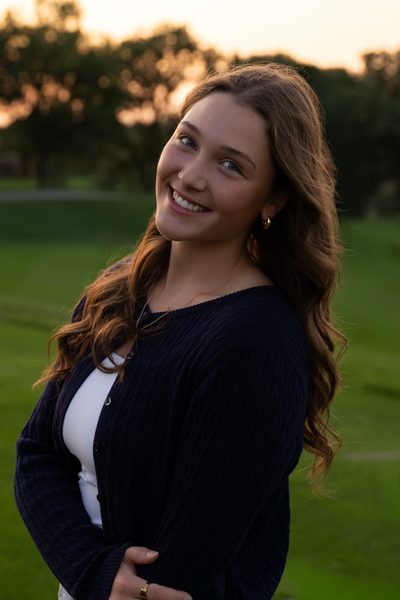
Amanda Rizkalla, a recent Steinbeck Fellow and Wisconsin Institute for Creative Writing Fellow, is the author of Hungered, her debut novel published through Henry Holt and Company. The protagonist Sofia is a twelve-year-old daughter and an older sister who, at the core of the book, wants to protect her mama and brother.

Hungered by Amanda Rizkalla, published May 19, 2026 by Henry Holt and Co.


Alina Nguyễn (AN): Perhaps we can start with the book as a whole. For me it felt like one continuous throughline with a bit of pause (but not too much) as it parallels the scarcity of time and space that Nina, Sofia, and Rafa are living and moving through. Can you talk about how you developed the structure of the book?

Amanda Rizkalla (AR): Initially, I tried using traditional chapters. The very first iteration of Hungered was a short story, and when I decided to develop that piece into a novel, I thought that in order for it to be publishable it needed to resemble the novels I had read throughout the years, which were mostly composed of traditional chapters. It took me a few months of trying to write with this structure to realize that it went against the logic of the book, requiring more closure and regularity than a story about uncertainty could offer on a consistent basis. 

Eventually, when I started to read novels that used different structures, I felt like I had permission to write the book the way I wanted, and evoke the fragmentation Sofia feels in her life visually, through the use of vignettes of irregular length and scope. 

AN: One of the things I appreciate about your novel is that it opens with witnessing, and the theme of observation is woven throughout. I’m curious about what your process was like in choosing this as a focus within the book.

AR: Because Sofia is twelve years old, one of the few things she can do in her situation—beyond a few well-intentioned but misguided attempts to take control of it—is to witness it. There is power in paying attention, in observing. On a practical level, her hypervigilance is part of her survival strategy. The more attuned Sofia is to her surroundings, the more likely she is to notice things that might threaten her physical safety. The same is true for her emotional safety. Alerting herself to the moods, needs, and desires of the people around her—particularly the adults who make decisions for her—gives her the best shot at protecting herself. 

Something I kept in mind while writing a book from the perspective of an observant twelve-year-old is that it is a bit of a paradox. There are things that Sofia, as our narrator, may observe, but as a child, might not have the capacity to understand or even describe. And because we see the story through Sofia’s eyes, it was a matter of asking myself both “What is she seeing?” and “What isn’t she seeing?” at the same time, for every line of the book. There are gaps in the narration that the reader has to bridge using subtext—things Sofia will probably not understand for another few years. In a creative writing class I took in college, my teacher, Harriet Clark, taught us that co-creation is the meeting place of the writer and reader through language. With her words in mind, I knew that, through the process of co-creation, I could rely on the reader to meet me halfway and make sense of what Sofia observes but does not understand.

AN: As an older sister with immigrant parents, I resonated with the moments where Sofia felt like she needed to step up for her mama. I wonder if that was something you considered when crafting those scenes where Sofia had to do what she felt was right even though they were risky?

AR: That’s a really good question. I think Sofia feels torn between a sense of loyalty to her mom and a distrust of her judgement. All kids want to trust their parents, but part of growing up is realizing that parents are people, too—complicated, fallible people who can try their very best and still come up short. So when Sofia steps up, sometimes it comes from a sense of protectiveness for mama or a concern for Rafa’s wellbeing, and other times it comes from an instinct for self-preservation. Often, these feelings are in conflict with one another, and Sofia has to decide what and whom to prioritize. When she does something risky—something that could anger mama, or get her in trouble with the housing manager at their apartment, for example—she has to weigh the risks against the possible rewards and make a decision, which can feel like an adult responsibility to bear.

AN: Another part of the book that I particularly found moving was the incorporation of Spanish and Arabic. I think you captured so well this tension between the grandchildren of immigrants that might not always be able to communicate in their grandparents’ languages. Why was it important for you to touch upon how language plays a role in Sofia’s world?

AR: This is one of the aspects of the book that comes from real life, as someone with less-than-fluent speaking skills in Spanish and Arabic. Just like Sofia, when I grew up there were (and still are) times where I did not feel “Mexican enough” or “Egyptian enough” because I could not speak Spanish or Arabic fluently. Also, like Sofia, I often felt the need to come to my own defense and say something like, “But I can understand what you’re saying!” 

Sofia, as a young girl coming of age, is trying to figure out how to belong. There is a way in which language can feel like a proxy for that belonging because it can grant or deny access to a community. For example, at Sofia’s school, rolling r’s when pronouncing vocabulary words in Spanish class “others” her, but it has the opposite effect at her abuelo’s house, where a command of the Spanish language not only helps her communicate with him, but connect with him. Sofia has to learn when and where to use the languages she knows if she wants to feel accepted by those around her. 

AN: An important space in Sofia’s world is the library, not just for books but also the resources it offers. I’m curious how you chose the library as another form of home for Sofia and Rafa?

AR: On the one hand, the library is a convenient place for mama to drop off her kids while she is at work, in addition to being a relatively safe place with access to practical things children need, like a restroom, a water fountain, and so on. I could also see mama thinking that if she could not enroll her children in a new school at the moment, dropping them off at a library had to be the next best thing. Although this is never made explicit in the book, I imagine a silent understanding between mama and the librarians who work there—that while the librarians are not responsible or liable for the children per se, they will keep an eye on them. 

On the other hand, the library provides a way for Sofia to learn about the world in ways that she would not be able to in school. This is in part due to the adult-level books on the shelves, such as the parenting book Sofia stumbles upon, but also because she has unrestricted access to the internet, which allows her to research apartment options and compile them into a list. It is also a place where Rafa is allowed to be a kid, playing video games on the public desktop computer. 

AN: I caught myself several times going “oh, we’re back in the past here” because you bring the reader from the present to the past in memory so effortlessly that it vibrates on the page. The drive into the gas station is one that comes to mind now. Can you speak to the decision to blend the present into the past when it appears to be happening at the same time?

AR: I think vignettes can make a story feel episodic, for better or worse, because there is the sense that the scenes are floating around in white space, unmoored until the narrator tells us when we are in time. So I think, in a way, the blending of past and present is built into the book’s structure.

Sofia is more likely to spend an extended period of time thinking about the past when the concerns of the present do not feel as excruciating or all-consuming—that is, when survival is not front of mind and there is more cognitive room to think about other things. This is why the lengthiest dives into family history, for example, occur when Sofia is at her abuelo’s house, finding that when her basic needs are (mostly) met, she has the capacity to reflect, to remember. 

But sometimes the past can force its way in regardless. For instance, when a certain sound or smell or image recalls a memory. Something like seeing a particular shade of orange reminds Sofia of her old friends, or finding a photo album at her abuelo’s house reminds her of her early childhood. In those moments, the present has to accommodate the past, just like in real life. 

AN: Food is one of the central themes in the novel not just for nourishment, but also imagination and a form of care. The foods are representations of familial pasts, presents, and futures in the book. They are also met with celebration. I’m curious what the role of food means to you and the intention to bring it into the novel. (I’ll be thinking about the bakery scene for a long time.)

AR: In the process of writing this book, and particularly in choosing the title, I thought about different kinds of hunger. Physical hunger, for food, occurs throughout the novel, but so does what Sofia hungers for emotionally. On an emotional level, I think Sofia associates food with moments of connection—whether it is cutting a cake to mark a birthday with friends, or sharing a home-cooked meal during the holidays, or even something as simple as having roast chicken with her family for dinner. Food, then, becomes social and cultural, too, which is something I can certainly relate to as someone from cultures that use food as a way to communicate love and care. 

As you mentioned, food is entangled with imagination in the novel, such as in the scene where Sofia pretends to bake peanut butter cookies for Rafa in the car, and mama’s use of turkey- and mashed-potato-flavored jelly beans as a substitution for a traditional Thanksgiving dinner. Because food has a way of conjuring the people, routines, and memories Sofia associates with home, imagining food and making pretend meals is a way for her to hold onto the idea that sometime soon, things will be normal again. 

AN: The novel uses humor in some parts that felt tender to me. How do you approach humor in writing this book and in general?

AR: Thank you for picking up on that! 

I’ve found that even in sharp, acute moments of overwhelm and stress, we can surprise ourselves by what we notice. It was important that Sofia, Rafa, and mama found moments of humor and lightness throughout the novel because often, finding something funny and laughing at it can mean acknowledging its strangeness, its wrongness. Laughing is a safe way to point to something unusual or perplexing, and when others join in, it can help the person who noticed it feel less alone. 

I also think you can learn a lot about someone by what they find funny. There are instances in the story where mama will laugh at something but Sofia will not, and that reveals two distinct ways of looking at the same circumstances. This makes humor an important form of characterization, too.   

AN: Without spoiling it, I’m curious if you could say anything about the ending; what would you want readers to know?

AR: The ending felt like the most honest and realistic conclusion to the story, even if it resists a sense of closure. It’s hard to say more without spoiling it, but the ending is uncomfortable and frustrating, and that is, I would say, the point. 

AN: Thank you so much for your time with me and for your brilliant debut. I was a fan of yours as a person first, and now a fan of your work. It is a joy to exist on this writing journey with you, my friend, and I look forward to making a wish every time a parenthesis falls from my eyelid into the palm of my hand.

AR: Thank you so much for reading and discussing this with me! I really appreciate you taking the time to have this conversation.


Amanda Rizkalla is the author of Hungered, her debut novel. A recent Steinbeck Fellow and Wisconsin Institute for Creative Writing Fellow, she has been a writer-in-residence at Ragdale, Hedgebrook, Djerassi, among others. After graduating from Stanford University, she received her MFA from the University of Wisconsin-Madison, where she was the Kemper Knapp Fellow. Her work has received a grant from the Barbara Deming Memorial Fund and an Elizabeth George Foundation Fellowship through Hedgebrook. 

Alina Nguyễn was born and raised in Los Angeles, CA, and the proud daughter of Vietnamese immigrants. Her risograph chapbook, Before There Were More Ghosts, was published by Tomorrow Today. She earned her MFA from the California State University, Long Beach. Nguyễn is a Ph.D. candidate in Creative Writing at the University of Nebraska-Lincoln, where she teaches and serves as Assistant Poetry Editor at Prairie Schooner.